I often wonder what the forest thinks of us when we pass through. Do the trees notice the whir of bicycle tires on pavement or gravel? Do the animals watching from the underbrush see us as threats, or just strange, two-wheeled creatures passing in a blur?
There is a profound humility that comes with entering a forest. You realize very quickly that you are not the main character here. You are a guest in a home that has been occupied for millennia. Whether I am riding through the damp, moss-covered trails of the Pacific Northwest or the ancient, managed woodlands of France, the feeling is the same: I am being watched by a thousand eyes I cannot see.
We tend to think of forests as scenery—a green backdrop for our adventures. But if we slow down, if we quiet our minds and really look, we realize that the forest is a complex society. It is a bustling city of predators, prey, scavengers, and architects, all living lives as complicated and urgent as our own. Understanding these animals doesn’t just make us better observers; it connects us to the very pulse of the planet.
The Untamed Spirit of the United States
When we think of the American wilderness, we often picture something vast and rugged. The animals here reflect that spirit—resilient, powerful, and occasionally, controversial.
The Gray Wolf
There is perhaps no animal that sparks more debate and awe than the Gray Wolf (Canis lupus). Once roaming nearly the entire continent, they were pushed to the brink of extinction. Today, their story is one of fragile recovery. In places like the Northern Rockies, they act as ecosystem engineers. By keeping deer and elk populations in check, they actually allow willow and aspen trees to regenerate, which in turn helps beavers and birds.
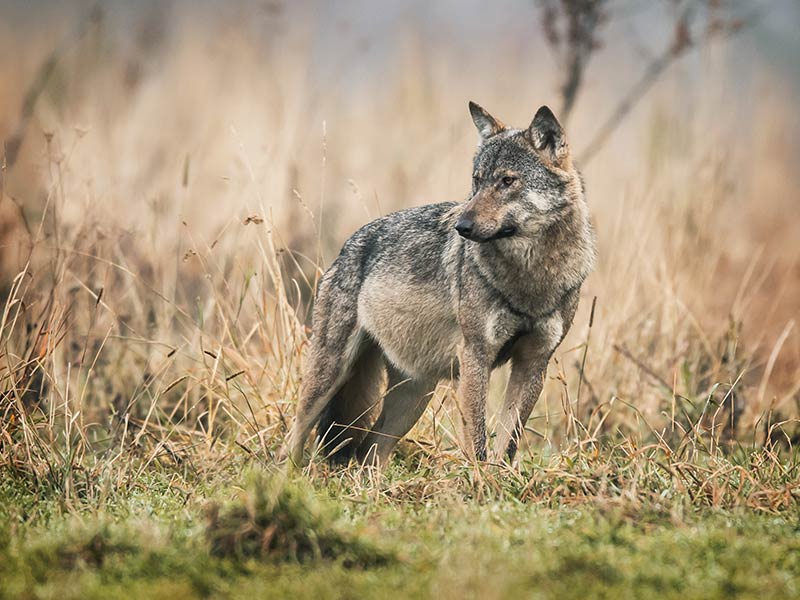
I find myself thinking about the wolf’s journey—how similar it is to the teenage years. It’s a balance of belonging to a pack and finding one’s own territory. Legally, their status is a pendulum, swinging between “endangered” and “delisted” depending on the court rulings and state lines. But out in the wild, they are simply survivors.
The Grizzly Bear
If the wolf is the ghost of the forest, the Grizzly Bear is its undeniable king. In the lower 48 states, the Grizzly is listed as threatened, clinging to strongholds in Montana, Wyoming, and Idaho.
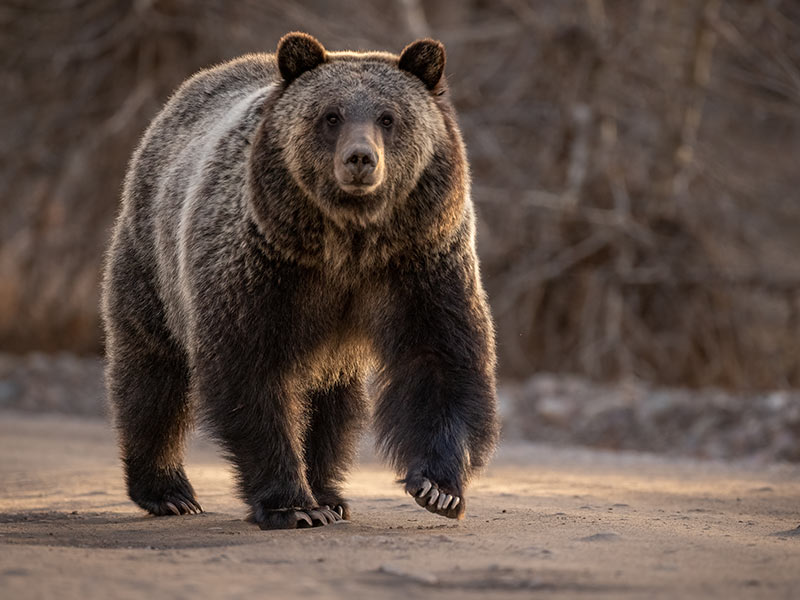
These bears are inextricably linked to the forests they inhabit. They rely heavily on the seeds of the whitebark pine—a high-elevation tree currently threatened by disease and climate change—to fatten up for winter. It is a fragile connection: if the tree fails, the bear struggles.
The Bald Eagle
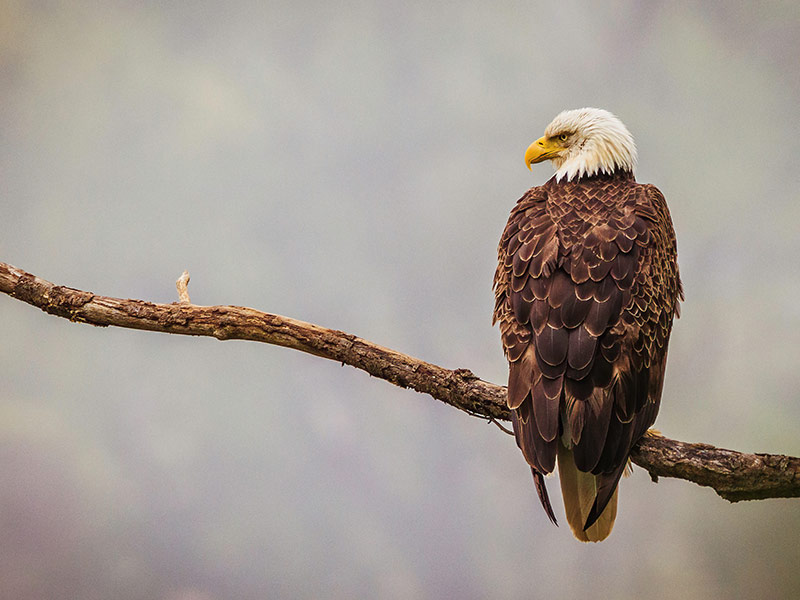
Is there a better comeback story than the Bald Eagle? Decades ago, the use of DDT decimated their populations, thinning their eggshells until they shattered in the nest. But we changed our ways. We banned the chemical, protected the bird, and waited. Now, seeing a Bald Eagle soaring over a waterway or perched in an old-growth tree is a common, yet still breathtaking, sight. They are a reminder that when we decide to care, nature can heal.
Seeing them from the saddle:
On our Pacific Redwoods Trek or the Pacific Northwest Trek, we ride through the very corridors these animals call home. While seeing a Grizzly is rare (and requires keeping a safe distance!), the chance to spot an eagle or hear the call of a wolf adds an electric charge to the air that you just don’t get in a car. You can also see gray wolves on our NYC to Montreal Trek.
The Vast North: Forest Animals of Canada
Cross the border to the north, and the forests feel deeper, perhaps a little wilder. The scale of the Canadian wilderness is hard to wrap your head around until you are pedaling through it, mile after mile.
The Moose
You don’t realize how massive a Moose (Alces alces) is until you see one. They look almost prehistoric, with their spindly legs and massive, palmate antlers. They are the giants of the boreal forest.
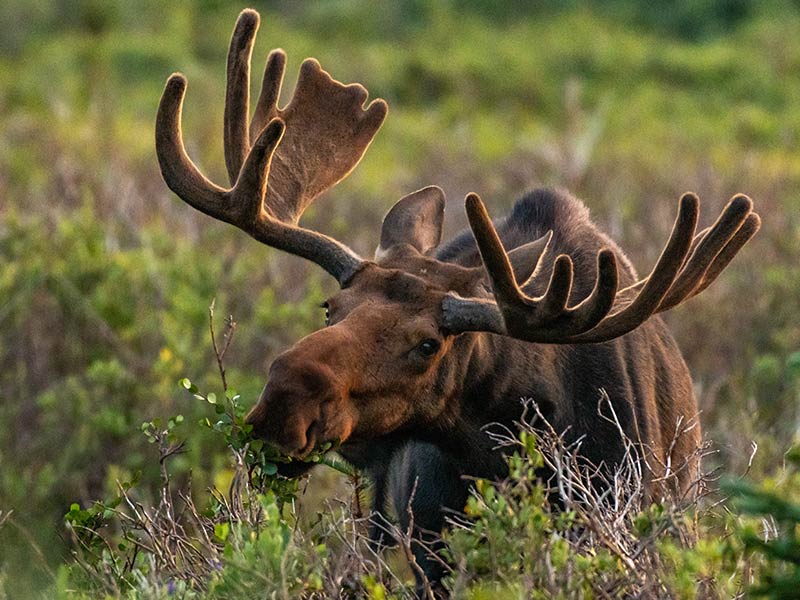
Despite their size, they can move through dense brush with surprising silence. However, they face a tiny but deadly threat: the winter tick. As winters warm, tick populations explode, sometimes overwhelming these majestic beasts. It is a stark reminder of how delicate the balance of nature truly is.
The Wolverine
The Wolverine (Gulo gulo) is the stuff of legends. Often called the “skunk bear” or “carcajou,” this member of the weasel family is renowned for its ferocity and strength.
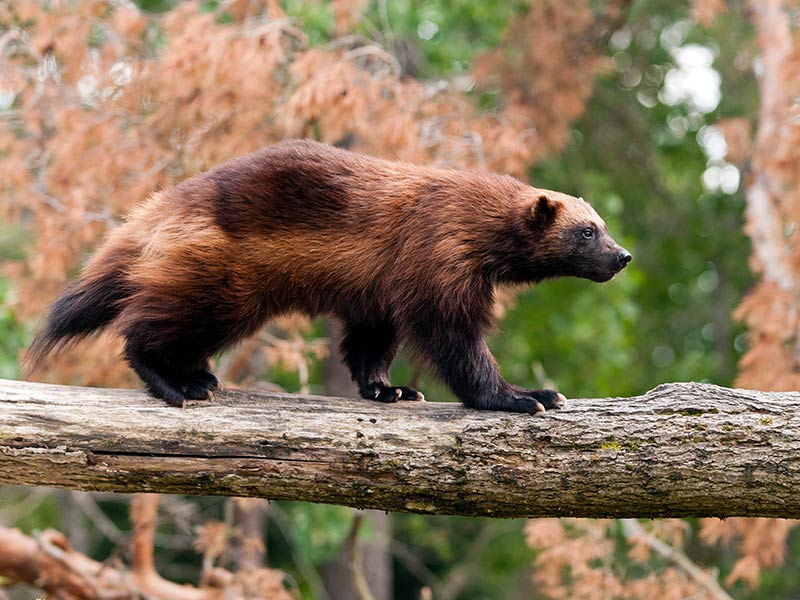
They are solitary wanderers, requiring vast territories of undisturbed snow and forest to survive. In Canada, they are a species of “Special Concern.” They are the introverts of the forest—elusive, tough, and preferring to be left alone.
The Peregrine Falcon
While they are found globally, the Canadian populations of Peregrine Falcons have a special resilience. These raptors are the fastest animals on the planet, capable of diving at speeds over 200 mph to catch prey. Like the Bald Eagle, they suffered greatly from pesticides but have made a remarkable recovery. They nest on high cliffs, watching the forest canopy from above with vision that puts ours to shame.
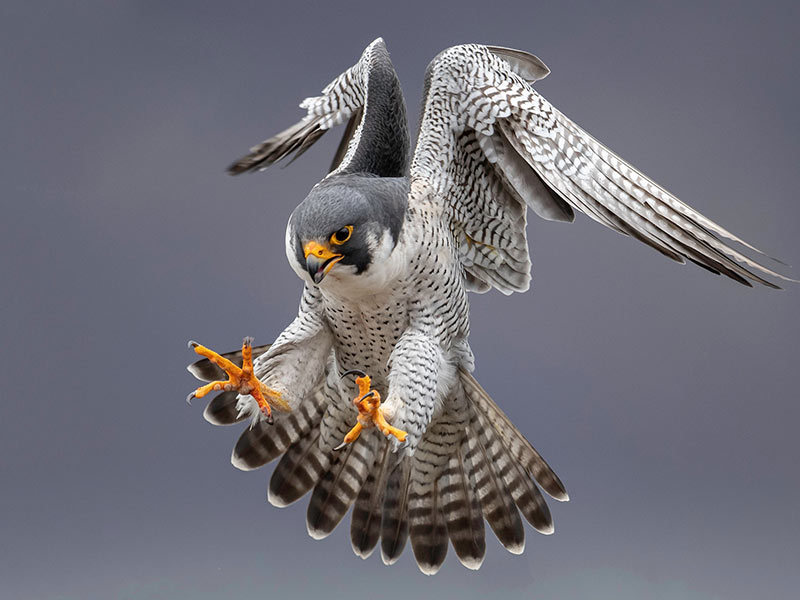
Seeing them from the saddle:
Riders on our Lake Ontario Trek or those venturing near Vancouver on the Pacific Northwest Trek are entering the fringes of these habitats. Seeing a Peregrine Falcon streak across the sky is a lesson in focus and speed that any cyclist can appreciate.
The Ancient Woods of France
Europe offers a different kind of forest experience. Here, the woods feel steeped in folklore, managed by humans for centuries yet still holding onto their wild hearts.
The Wild Boar (Sanglier)
In France, the Sanglier is an icon. Intelligent, adaptable, and social, Wild Boar live in matriarchal groups called sounders (compagnies). They are the forest’s rototillers, turning over the soil in search of roots and tubers.
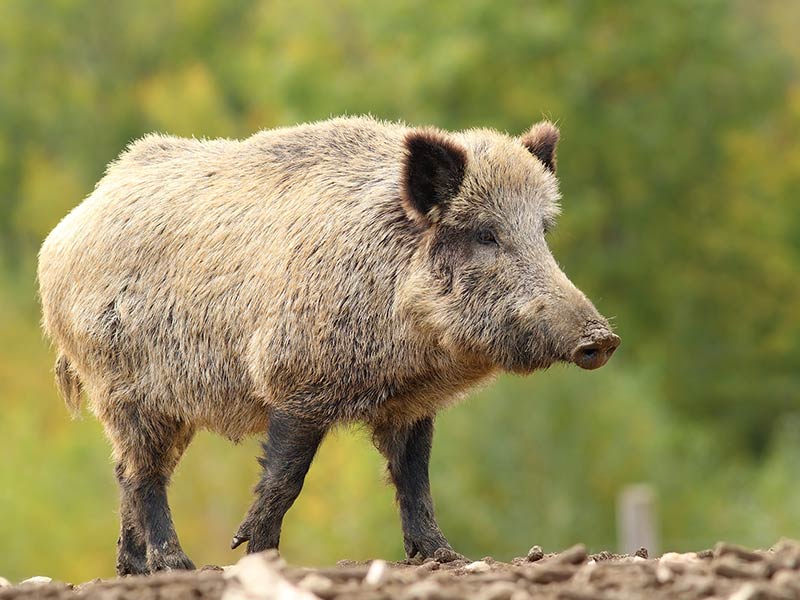
While their populations are actually increasing—sometimes leading to conflict with farmers—they remain a vital part of the woodland ecosystem. There is something respectable about their stubborn adaptability. They have watched civilizations rise and fall and simply kept on foraging.
The Red Fox
The Red Fox (Vulpes vulpes) is a master of two worlds. In the French countryside, they are elusive hunters of rodents and rabbits.
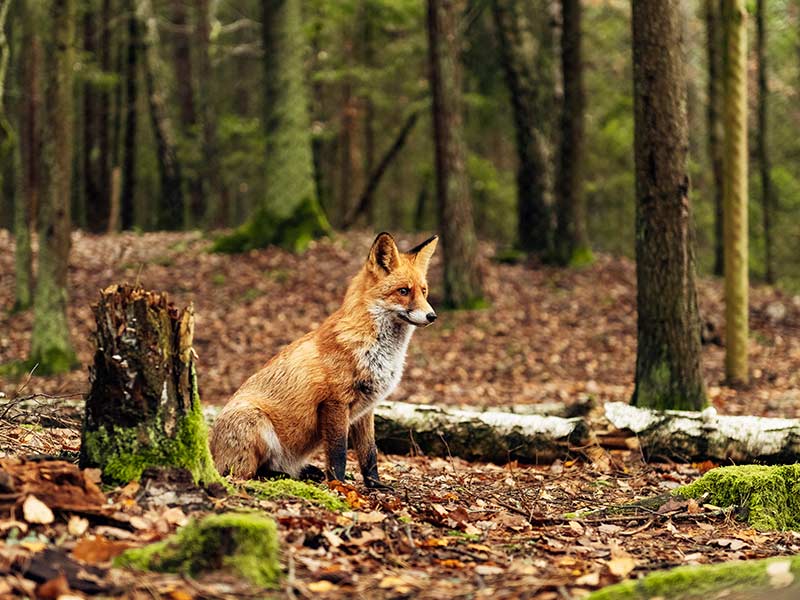
They are widespread, their fiery coats a sudden flash of color against the green and brown of the undergrowth. They remind me that adaptability is the greatest survival skill one can possess.
The Golden Eagle
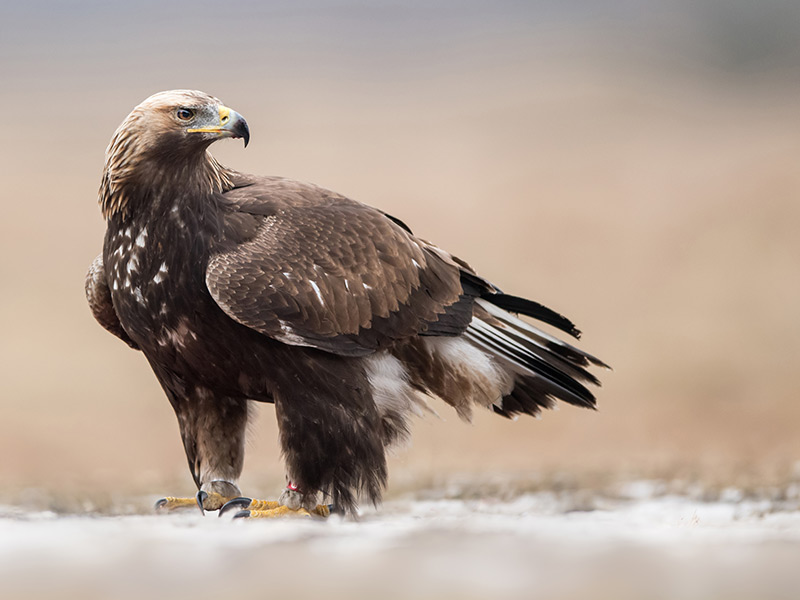
In the mountainous forests of France, particularly near the Alps and Pyrenees, the Golden Eagle reigns supreme. Larger than the Bald Eagle, these birds are powerful hunters. They require large, open territories to hunt, often patrolling the tree lines. To see one is to see true wilderness, even in a continent as developed as Europe.
Seeing them from the saddle:
Our Amsterdam-Paris Trek and the European Grand Tour wind through regions where these animals thrive. Gliding past a French hedgerow at dusk offers the perfect opportunity to spot a fox darting into the safety of the trees.
The Hedgerows and Highlands of the United Kingdom
The UK may not have the vast wilderness of Canada, but its pockets of nature are vibrant and full of character.
The European Badger
There is something quietly dignified about the European Badger (Meles meles). You won’t often see one during the day, but their presence is everywhere if you know how to look. A disturbed patch of earth, a well-worn path through the undergrowth, the subtle architecture of a sett hidden beneath tree roots—these are the signs of a life lived mostly in the dark.
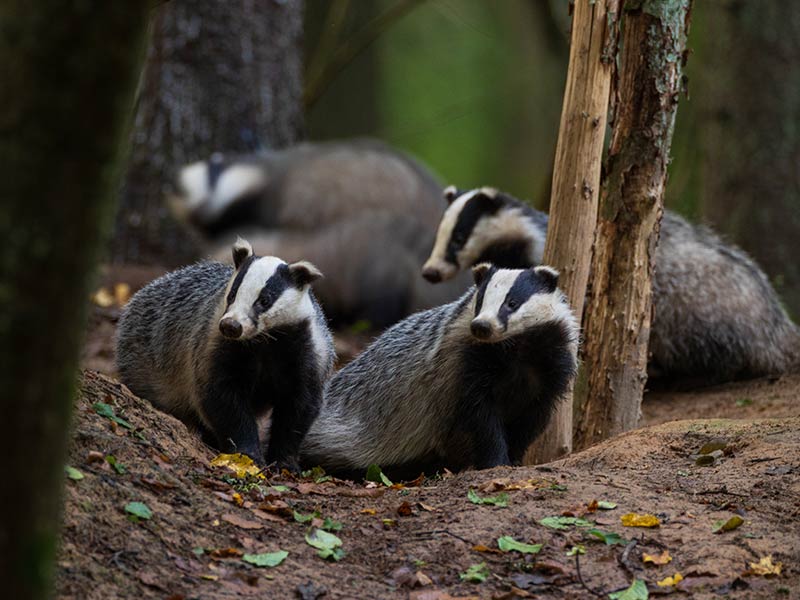
Badgers are deeply social creatures, living in family groups that can persist for generations. Their setts are not just burrows; they are inherited homes, expanded and maintained over decades. In a way, they remind me of old villages—layered with history, shaped by those who came before. And yet, beneath quiet woodlands and at the edges of our world, they carry on unseen, a reminder that not all of nature needs to be visible to be present.
The Pine Marten
If the badger is the quiet steward of the forest floor, the Pine Marten (Martes martes) is its ghost in the trees. Elusive and agile, pine martens move through the woodland canopy with a grace that feels almost unreal. You could spend days riding through their habitat and never know they were there.
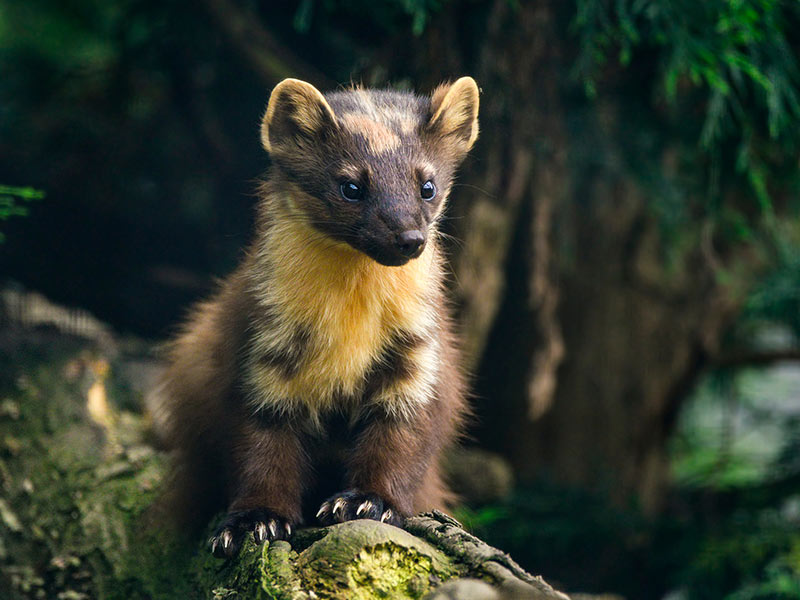
And yet, they are watching—slipping between branches, pausing just long enough to assess the world below before vanishing again. Once pushed to the brink in much of the UK, pine martens are slowly returning, reclaiming pockets of woodland where they had long been absent. Their recovery is subtle, almost whispered, but it carries weight. It signals that given time and space, the forest can begin to mend itself.
The European Robin
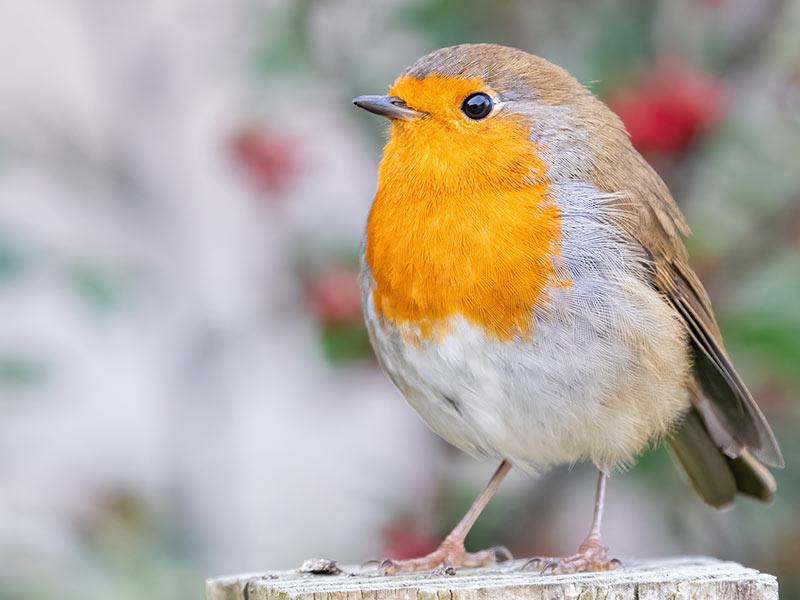
If you stop for a rest on a trail in the UK, you might be visited by a small bird with a bright orange-red breast. The European Robin is famously brave—or perhaps just opportunistic.
If you stop for a rest on a trail in the UK, you might be visited by a small bird with a bright orange-red breast. The European Robin is famously brave—or perhaps just opportunistic. They are known as the gardener’s friend, often waiting for soil to be turned over to snatch a worm. Despite their cute appearance, they are fiercely territorial. I admire that about them; they are small, but they know their worth and defend their space.
Seeing them from the saddle:
Whether it’s the London-Paris Trek or exploring the green hills of our Green Ireland Trek, the UK’s wildlife is accessible. It teaches us that nature isn’t just “out there” in the remote distance; it lives right alongside us.
A Shared Struggle, A Shared Hope
When you look at these four regions side by side, the lines on the map start to fade. The Red Fox doesn’t care if it’s in a British woodland or a French forest; it just needs a habitat. The Peregrine Falcon dives the same way in Canada as it does in the UK.
Yet, the challenges are surprisingly similar. Habitat loss is the universal threat. Whether it’s the fragmentation of the Wolverine’s territory in Canada or the loss of hedgerows in the UK, animals are finding their homes shrinking. Climate change, too, ignores borders. The ticks plaguing the Canadian Moose and the pine beetles destroying the Grizzly’s food source in the US are symptoms of the same fever.
But there is also shared hope. In every one of these countries, there are people fighting to protect these spaces. The recovery of the Bald Eagle and the Peregrine Falcon proves that we are capable of fixing our mistakes.
How We Can Help
We often feel helpless when reading about endangered species. What can one person do? The answer is: quite a lot.
- Support Conservation Organizations: Groups like the U.S. Fish and Wildlife Service, the RSPB in the UK, and Parks Canada do the heavy lifting of science and policy. They need our support.
- Respect the Wild: When we visit forests, we must leave no trace. This means staying on trails, packing out trash, and never, ever feeding wildlife.
- Slow Down: This is where the bicycle comes in. When we travel by car, we bypass the world. When we travel by bike, we inhabit it. We become observers rather than intruders.
The View from the Handlebars
I believe that adventure is the best educator. You can read about a forest in a textbook, but until you have smelled the pine needles baking in the sun or felt the drop in temperature as you ride under a canopy of oak, you don’t truly know it.
At Teen Treks, we design our routes not just to get from point A to point B, but to facilitate these moments of connection. When our teens pedal through the Pacific Northwest, they aren’t just riding bikes; they are riding through the living room of the Black Bear. When they cross the countryside of France, they are sharing the dawn with the Wild Boar.
These summer travel programs for teenagers foster a sense of independence and self-esteem. They also build something equally important: empathy. When a teenager realizes that the world is full of life that is entirely separate from their own social media feeds or school pressures, their perspective shifts. They learn that they are part of a much larger, wilder, and more beautiful story.
So, the next time you find yourself on a quiet forest road, stop pedaling for a moment. Listen. Watch. The forest is alive, and if you are lucky, it might just let you see its secrets.