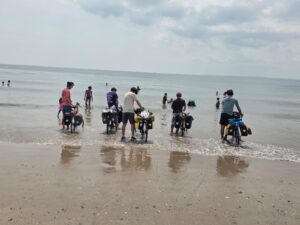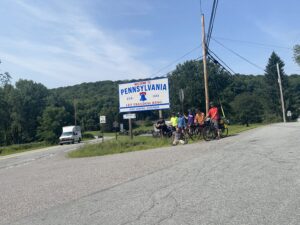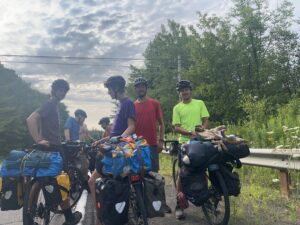
When I travel, I carry a small notebook. It’s not for journaling my every move or sketching grand cathedrals, though those are noble pursuits. Instead, it’s for words. Simple words, really. The kinds of words that can build a bridge between strangers, that can turn a transactional moment into a human connection. A simple “hello” or “thank you” in the local tongue has a quiet power. It says, “I see you. I respect your home. I am trying.”
Traveling, especially on a bike tour, is about immersing yourself in a new place, not just passing through it. It’s about the wind on your face, the smell of fresh bread from a village bakery, and the faces of the people you meet.
Learning a few basic phrases is an act of respect and curiosity. It’s a small effort that can transform your experience, opening doors and hearts in unexpected ways. This is true whether you’re cycling through the lavender fields of France, the tulip-lined paths of the Netherlands, or the vibrant streets of New York City where many languages echo.
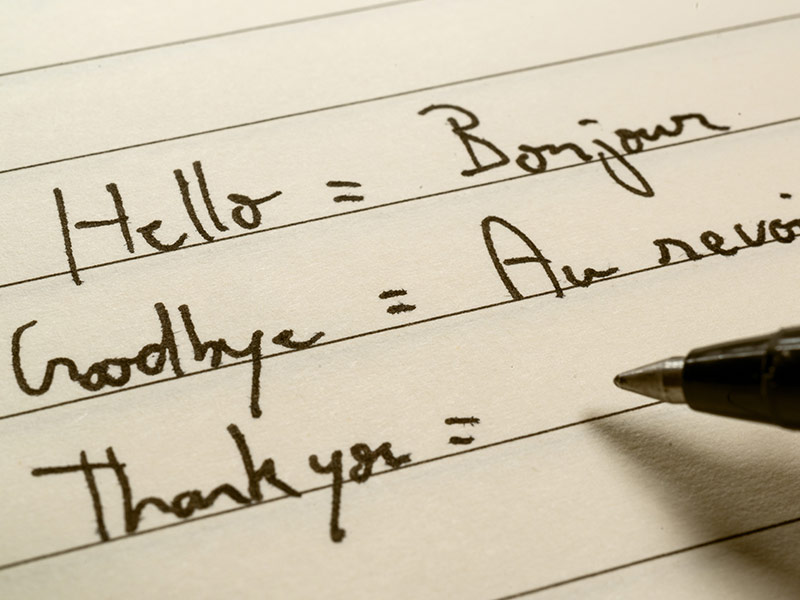
For our bike tours across the USA, Canada, Ireland, England, France, Belgium, and the Netherlands, a few key languages come to the forefront: English, French, Dutch, Irish, and Spanish. Knowing just a handful of words in these languages can make all the difference. It’s not about achieving fluency overnight; it’s about showing a willingness to connect. It’s a gesture that acknowledges you are a guest in someone else’s world, and you are grateful to be there.
Join me now, and learn useful phrases to use on your next teen bike tour, as well as common sayings in other languages for your adventures across the world.
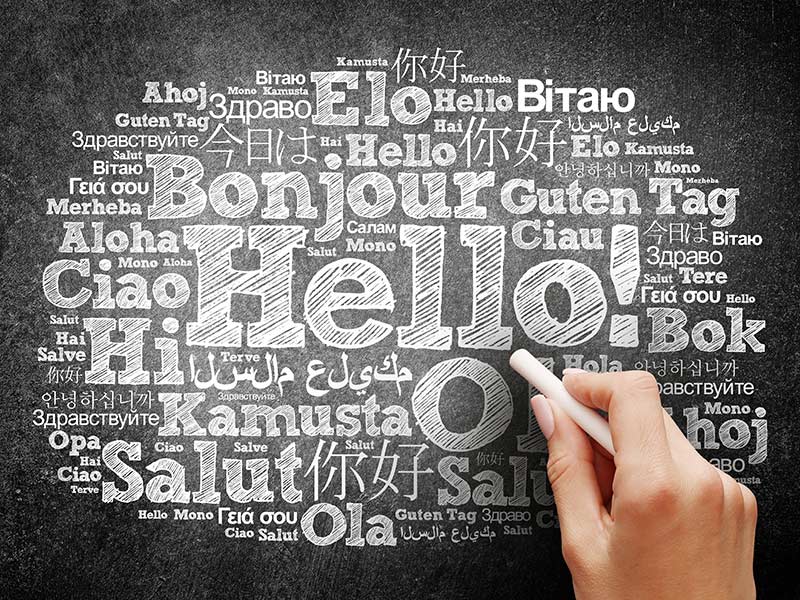
How to Say "Hello"
A greeting is the first thread of connection. It’s an opening, an invitation for a shared moment. Whether it’s a formal “good day” to an elder or a casual “hi” to a peer, starting with the right word sets a tone of respect and friendliness.
- English: Hello. Simple, universally understood in many parts of the world, but especially in the USA, Canada, England, and Ireland.
- French: Bonjour (bon-ZHOOR) is the formal, all-purpose greeting that works for anyone, at any time of day. It literally means “good day.” For friends or younger people, a more casual Salut (sah-LOO) is common.
- Dutch: Hallo (HAAL-oo) is the standard greeting in the Netherlands and the Flanders region of Belgium. It’s friendly and appropriate for most situations. For a more informal touch, you can use Hoi (hoy).
- Irish: Dia duit (DEE-ah GHWIT) is the traditional Irish way to say hello. It translates to “God be with you.” It’s a beautiful phrase that carries the weight of history and culture.
- Spanish: Hola (OH-laa) is the go-to greeting in Spanish-speaking communities, including many parts of the USA and Canada. It’s friendly and versatile.
How to Say "Goodbye"
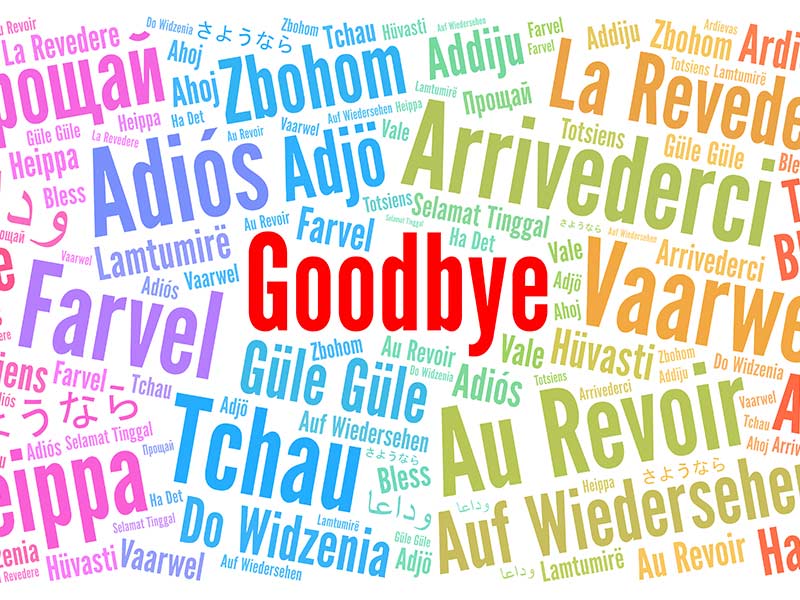
Saying goodbye closes the interaction with the same respect you started with. It’s a way of wishing someone well as you part ways. Like greetings, goodbyes can be formal or informal.
- English: Goodbye. A classic and polite way to end a conversation.
- French: Au revoir (oh ruh-VWAH) is the most common and polite way to say goodbye, meaning “until we see again.” For a more casual farewell among friends, you can say À plus tard (ah ploos TAR), which means “see you later.”
- Dutch: Tot ziens (toht zeens) translates to “until I see you again” and is a polite, common way to say goodbye.
- Irish: Slán (slawn) is the simplest and most common way to say goodbye. It means “safe,” as in “be safe.”
- Spanish: Adiós (ah-dee-OHS) is the standard farewell. You might also hear Hasta luego (AHS-tah LWAY-go), meaning “see you later.”
How to Say "Please"
“Please” is a word of humility and respect. It turns a demand into a request and shows that you value the other person’s help and time. I’ve always found that a “please” can soften any interaction, no matter the language barrier.
- English: Please.
- French: Use S’il vous plaît (seel voo PLEH) in formal situations or when speaking to someone you don’t know. For friends and family, it’s S’il te plaît (seel teh PLEH). The phrase literally means “if it pleases you.”
- Dutch: Alstublieft (AHL-stoo-bleeft) is the standard word for “please.” It’s used in both formal and informal contexts.
- Irish: Le do thoil (leh duh HULL) means “please.”
- Spanish: Por favor (por fah-VOR) is the essential phrase for “please” used across all Spanish-speaking regions.

How to Say "Thank You"
Gratitude is a universal currency. A simple “thank you” acknowledges kindness and effort, and it’s one of the most important phrases you can learn. It’s a small word that carries immense warmth.
- English: Thank you.
- French: Merci (mehr-SEE) is the simple and elegant way to express thanks.
- Dutch: You can say Dank u (dahnk oo) in formal situations or Dank je (dahnk yuh) informally. Both are widely understood and appreciated.
- Irish: Go raibh maith agat (guh rev MAH uh-GUT) is how you say “thank you.” It translates to “may you have goodness.”
- Spanish: Gracias (GRAH-see-ahs) is the universal way to say “thank you.”

Other Common Sayings to Know
Beyond the core four, a few other phrases can be incredibly helpful. They show you’re engaged in the conversation and prepared for basic interactions.

How are you?
- English: How are you?
- French: Comment allez-vous? (kom-mohn tah-lay VOO?) is formal. Comment ça va? (kom-mohn sah VAH?) is informal.
- Dutch: Hoe gaat het? (hoo GAHT het?)
- Irish: Conas atá tú? (KUN-ass uh-TAW too?)
- Spanish: ¿Cómo estás? (KOH-moh es-TAHS?)
Join Us in France!
You're welcome.
- English: You’re welcome.
- French: De rien (duh ree-EHN), which literally means “it’s nothing.”
- Dutch: Graag gedaan (grahg huh-DAHN).
- Irish: Tá fáilte romhat (taw FOIL-cheh ROH-at).
- Spanish: De nada (day NAH-dah).
Excuse me.
- English: Excuse me.
- French: Excusez-moi (ex-kyoo-zay MWAH) to get someone’s attention or apologize.
- Dutch: Pardon (par-DON).
- Irish: Gabh mo leithscéal (gov muh lesh-kyale).
- Spanish: Perdón (pehr-DOHN) or Con permiso (kohn pehr-MEE-soh) to pass by someone.
Join Us in France!
Phrases in Other Languages
While our bike tours focus on specific regions, the spirit of travel is about exploring the whole world. Here are some key phrases in other languages you might encounter on your journeys.
- German (Germany, Austria):
- Hello: Guten Tag (GOO-ten tahk)
- Goodbye: Auf Wiedersehen (owf VEE-der-zane)
- Please: Bitte (BIT-uh)
- Thank You: Danke (DAHN-kuh)
- Italian (Italy):
- Hello/Goodbye (informal): Ciao (chow)
- Goodbye (formal): Arrivederci (ah-ree-veh-DEHR-chee)
- Please: Per favore (pehr fah-VOR-eh)
- Thank You: Grazie (GRAHT-zee-eh)
- Japanese (Japan):
- Hello: Konnichiwa (kohn-nee-chee-wah)
- Goodbye: Sayonara (sah-yoh-nah-rah)
- Please: Onegaishimasu (oh-neh-guy-shee-mas)
- Thank You: Arigato (ah-ree-GAH-toh)
- Mandarin Chinese (China):
- Hello: Nǐ hǎo (nee how)
- Goodbye: Zàijiàn (zigh-jen)
- Please: Qǐng (ching)
- Thank You: Xièxie (shyeh-shyeh)
- Portuguese (Portugal, Brazil):
- Hello: Olá (oh-LAH)
- Goodbye: Adeus (ah-DEH-oosh)
- Please: Por favor (por fah-VOHR)
- Thank You: Obrigado (oh-bree-GAH-doo) if you’re male, Obrigada (oh-bree-GAH-dah) if you’re female.
Your Journey into Language
Learning these simple phrases is more than a practical tool; it’s an exercise in empathy. It’s a recognition that every place has a rhythm, a history, and a voice of its own. When you make an effort to speak, even a single word, you are participating in that rhythm rather than just observing it from the outside.
On your next journey, whether it’s a bike trek through the countryside or an exploration of a new city, I encourage you to fill your own small notebook with these words. Practice them. Don’t be afraid of making mistakes. I’ve found that people are almost always appreciative of the effort. A smile often follows a fumbled attempt at their language, a sign of shared humanity that transcends perfect pronunciation.
Are you ready to pedal into a new culture and connect with the world on a deeper level? Our bike tours are designed to be adventures of discovery, not just of places, but of people. Something that should definitely be on your teenage bucket list.