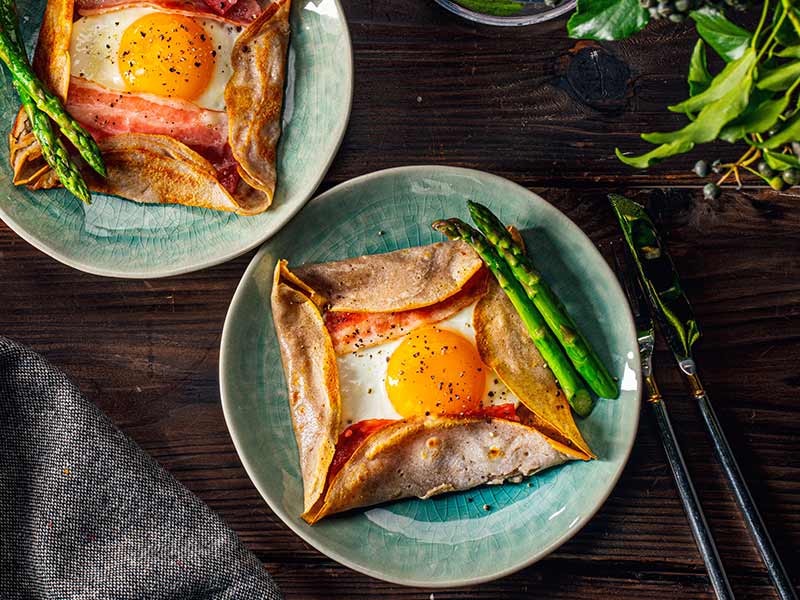
I often wonder if we travel to see new things, or if we travel to feel new things. When you step off the plane in a country like France, the air feels different. The light hits the buildings in a way that makes you pause. But more than anything, it is the smell—the scent of yeast, browned butter, and roasting meats wafting from street corners—that tells you you are no longer at home.
For a teenager, France can feel both incredibly inviting and slightly intimidating. You are on the precipice of adulthood, navigating a culture that prides itself on sophistication and history. There is a vulnerability in sitting down at a bistro table, stumbling over your high school French, and hoping you haven’t accidentally ordered something terrifying. But isn’t that where the growth happens? In the willingness to try?
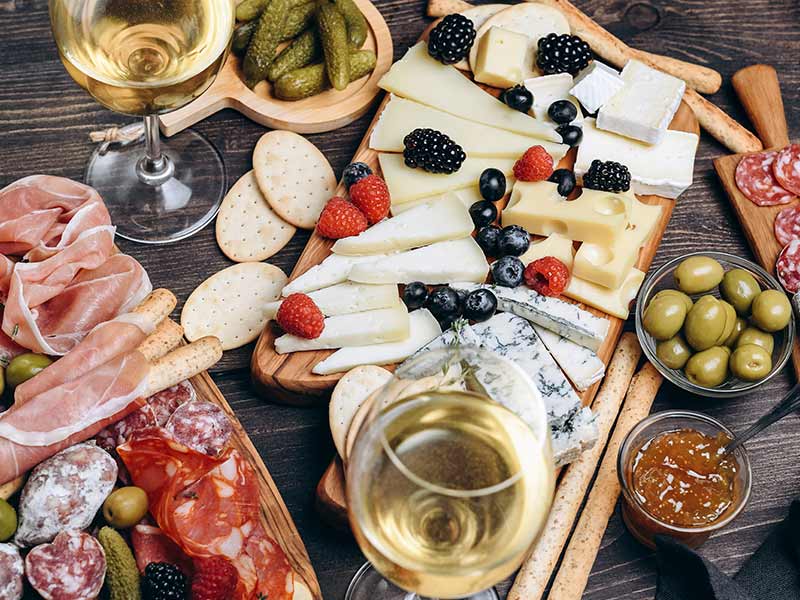
Food is the most accessible language we have. You don’t need to be fluent in French to understand the comfort of a warm baguette or the thrill of a perfectly seared steak. This guide isn’t just a list of calories to consume; it is an invitation to experience the culture of France through its flavors. From the crunch of a morning pastry to the rich depths of a slow-cooked stew, these are the culinary milestones that will mark your journey.
Morning Delights: Pastries and Breakfast
Mornings in France are a quiet ritual. Unlike the rush of American breakfasts, often eaten in the car or on the way to school, the French morning is a slow, deliberate appreciation of texture and simplicity.
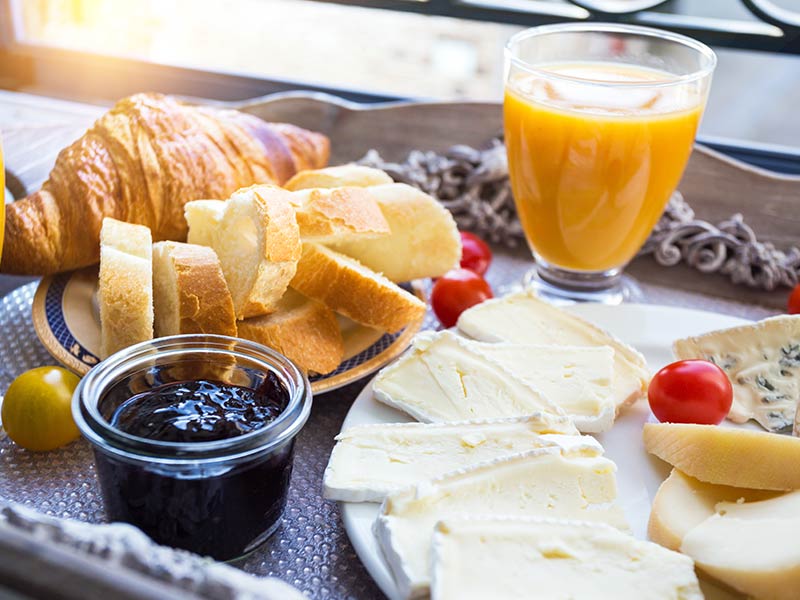
The Croissant
Have you ever truly tasted a croissant? I don’t mean the soft, bread-like crescent rolls from a supermarket tube. I mean a real, artisanal French croissant. It is a study in contradictions: messy yet elegant, simple yet incredibly difficult to perfect.
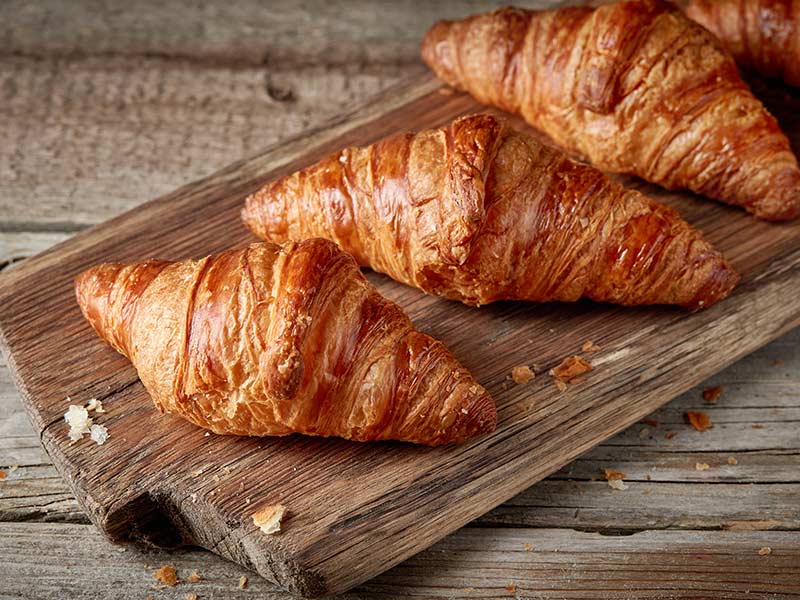
Though we associate them entirely with France, the croissant actually has Austrian roots, popularized in Paris by August Zang in the 1830s. But the French perfected it. When you bite into one, it should shatter. That is the only word for it. The outer shell is a deep golden brown, crisp and flaky, giving way to an interior that is soft, airy, and smells intensely of high-quality butter.
For a teen traveler, the boulangerie (bakery) is your sanctuary. It is an affordable luxury. Ordering “un croissant au beurre, s’il vous plaît” is a small act of independence. It connects you to a tradition of lamination—folding dough and butter over and over again—that has been practiced for centuries.
Pain au Chocolat
If the croissant is the sophisticated older sibling, the pain au chocolat is the rebellious joy of childhood that we never really outgrow. It uses the same laminated dough as the croissant—flaky, buttery, crisp—but hides a dark secret inside: two distinct batons of chocolate.
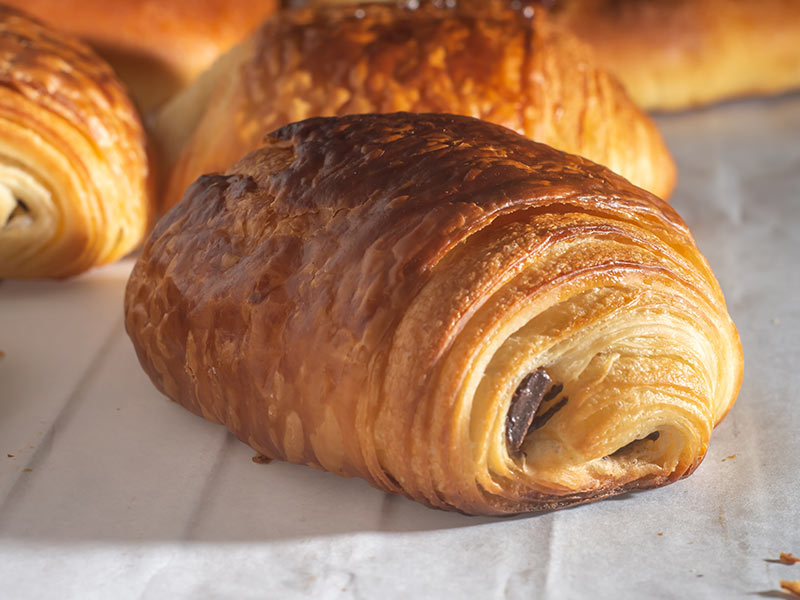
I find myself thinking about the balance of this pastry often. It isn’t a doughnut; it isn’t overwhelmed by sugar. The chocolate is dark, usually semi-sweet, providing a bitter counterpoint to the rich, savory butter of the dough. It asks you to pay attention. You have to hunt for the chocolate with each bite. It is the perfect fuel for a morning spent walking the streets of Paris or cycling through the Loire Valley, giving you that quick burst of energy and a lingering taste of cocoa.
The Baguette
In 2022, UNESCO added the artisanal know-how and culture of the baguette to its list of Intangible Cultural Heritage. Think about that for a moment. A loaf of bread is considered so vital to humanity that it is protected alongside folk dances and ancient rituals.
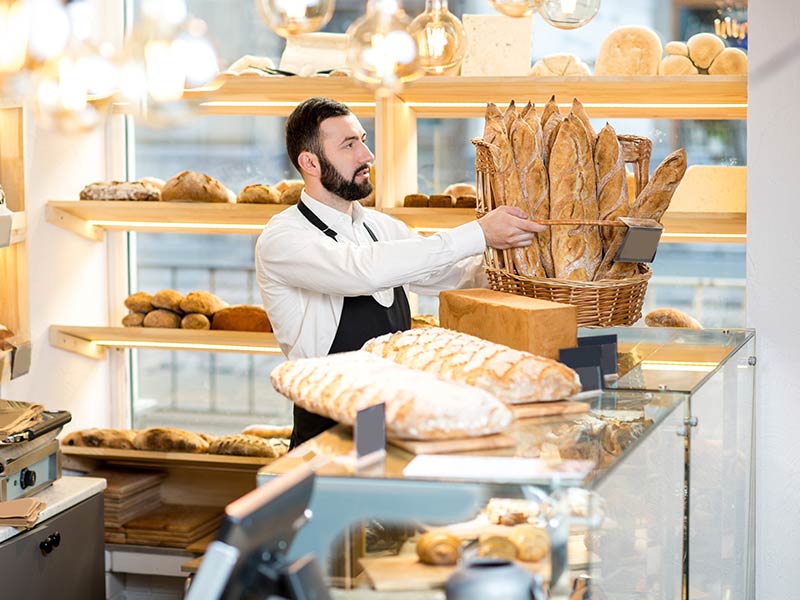
The baguette is the heartbeat of French daily life. It is made from just four simple ingredients: flour, water, salt, and yeast. Yet, in the hands of a master baker, it becomes magic. A proper “baguette tradition” has a crust that crackles when you squeeze it and an interior (the crumb) that is cream-colored with large, irregular holes.
Here is a secret for you: it is entirely culturally acceptable—encouraged, even—to rip the end off the baguette (called le quignon) and eat it while you are walking out of the bakery. It is a moment of pure, unadulterated pleasure. Walking down a cobblestone street, munching on warm bread, you aren’t just a tourist; you are participating in a daily French ritual that dates back generations.
Savory Sensations: Lunch and Dinner
As the day turns to afternoon and evening, French food becomes more about sitting down and engaging with the people around you. Meals are not rushed. They are times to rest, converse, and savor.
Join Us in France!
Steak Frites
Sometimes, you just crave comfort. Steak frites is the ultimate bistro classic—steak and fries. But because this is France, even the simple things are elevated to an art form.
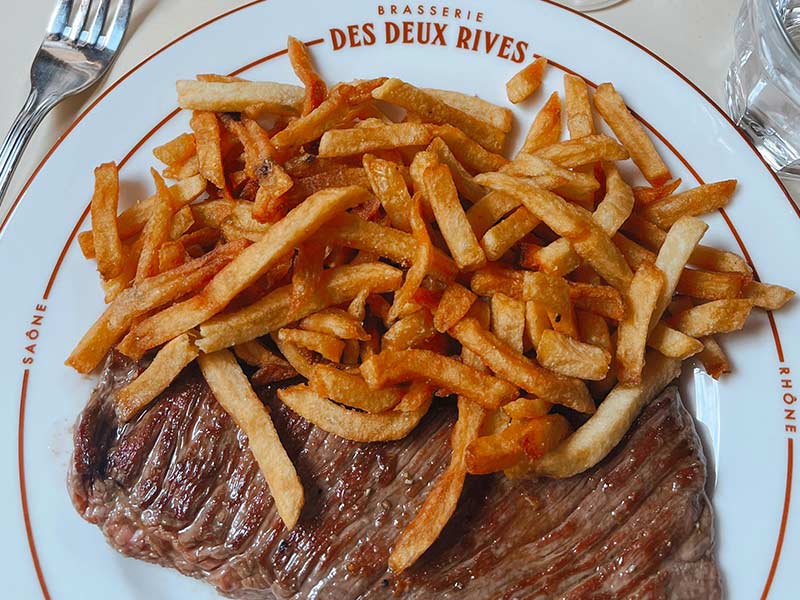
The steak is usually a flavorful cut like entrecôte (ribeye) or faux-filet (sirloin), pan-seared to form a delicious crust. If you are brave, order it à point (medium-rare) or saignant (rare) to eat it as the French do. It often comes with a sauce, perhaps a creamy peppercorn or a rich Béarnaise.
And the frites? They are thinner than American steak fries but crispier than fast-food shoestrings. They are salty, golden, and perfect for mopping up the sauce left on your plate. Eating steak frites in a bustling brasserie, surrounded by the clatter of silverware and the hum of conversation, makes you feel like a local. It is a meal that says, “I belong here.”
Croque Monsieur
I recall sitting in a café near the Seine, watching the boats drift by, and ordering a Croque Monsieur. I expected a grilled cheese. What I got was a masterpiece.
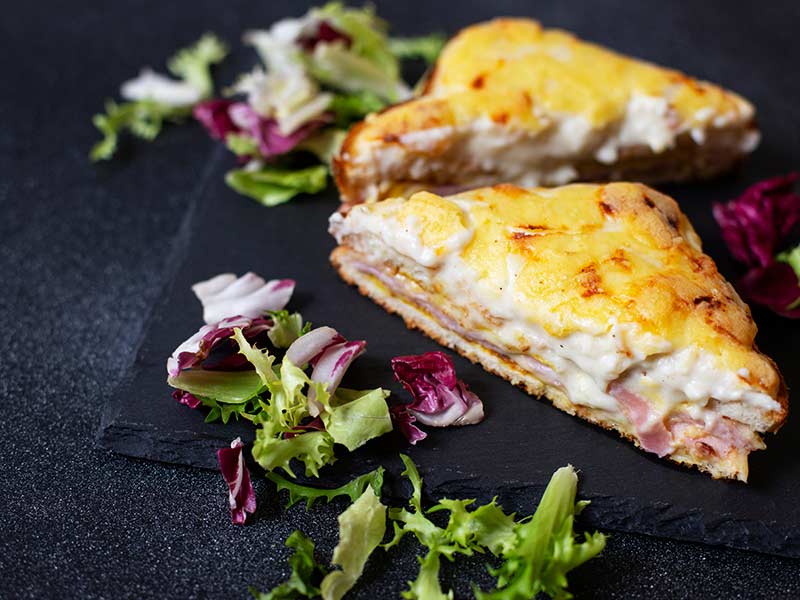
A Croque Monsieur is ham and cheese, yes, but it is the execution that matters. It starts with high-quality bread and jambon de Paris (cooked ham). The cheese is typically Gruyère or Emmental, which has a nuttier, more complex flavor than standard cheddar. But the secret weapon is Béchamel—a creamy white sauce made from butter, flour, and milk.
The sandwich is layered with this sauce, topped with more cheese, and then broiled until it is bubbling and browned. It requires a knife and fork. It forces you to slow down. It is rich, indulgent, and undeniably satisfying after a long day of hiking or biking.
Quiche Lorraine
Originating from the Lorraine region in northeastern France, near the German border, this dish reflects a blend of cultures. It is a savory custard tart, but that description hardly does it justice.
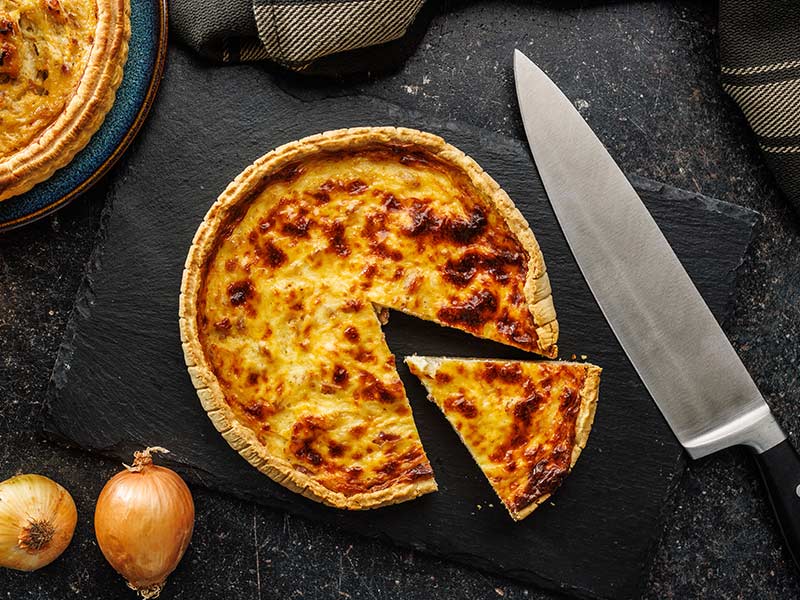
A true Quiche Lorraine contains eggs, heavy cream (crème fraîche), and lardons (smoked bacon). Cheese is actually a modern addition, though you will often find it with Gruyère today. The crust should be buttery and flaky, holding back a filling that is impossibly silky and wobbles just slightly when the plate is set down.
It is the perfect lunch for a teen traveler because it is readily available at almost every bakery and café. It is portable, affordable, and packs a punch of protein and flavor. It teaches you that egg dishes aren’t just for breakfast—they can be a sophisticated main event.
Adventurous Eats: Trying New Things
Travel is about stretching your boundaries. It is about saying “yes” to the things that make you hesitate. France offers a few culinary challenges that, once conquered, become badges of honor.
Escargots
Snails. I know. The very word makes some people shudder. But let me ask you: is it the snail you are afraid of, or the idea of the snail?
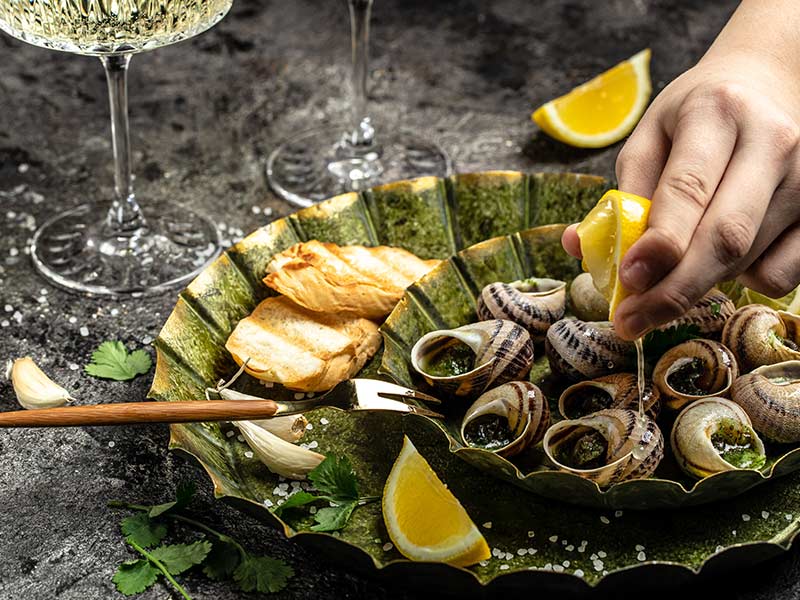
Escargots de Bourgogne is the classic preparation. The snails are removed from their shells, cooked, and then returned to the shells with a generous dollop of butter, garlic, and parsley. When they come to the table, they are bubbling hot and smell essentially like garlic bread.
The texture is similar to a mushroom or a clam—slightly firm but tender. You use tiny tongs to hold the shell and a small fork to extract the meat. It is a performance. And honestly? It mostly tastes like delicious, garlicky butter. Trying them is a rite of passage. It is a moment where you decide to trust the culture you are visiting, to believe that a dish loved for centuries is loved for a reason.
Oeufs Mayonnaise
This sounds deceptively simple: eggs with mayonnaise. You might be thinking, “I can make that at home.” But you can’t make it like this.
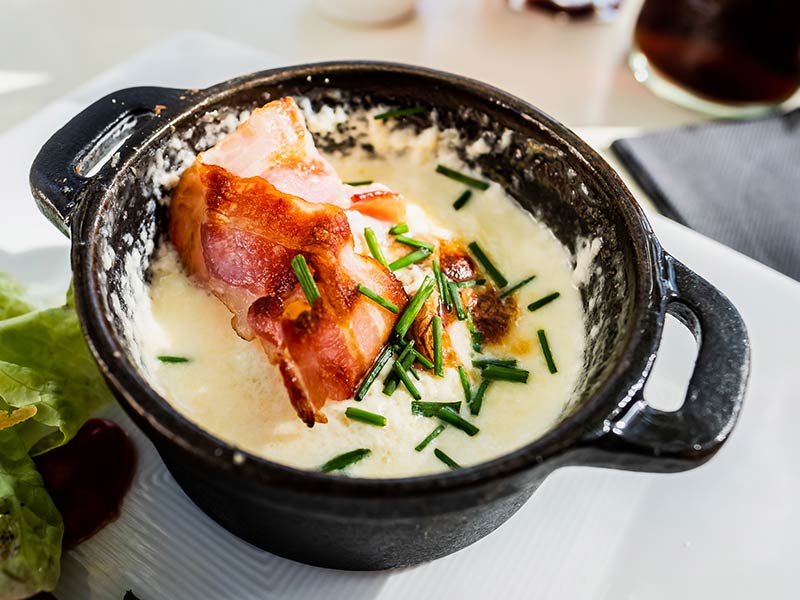
“Oeufs mayo” is a bistro staple that has seen a resurgence in popularity. It is hard-boiled eggs served cold, smothered in a high-quality, house-made mayonnaise, often garnished with fresh herbs or a sprinkle of paprika. Or it can be mixed and served in a mini cocotte as shown in the photo above (yum!).
The mayonnaise in France is different—richer, more mustard-forward, and yellow from fresh egg yolks.
It is a starter that celebrates the quality of ingredients. When the eggs are farm-fresh and the mayo is whipped by hand, the result is creamy, tangy, and deeply satisfying. It is a lesson in humility: simple things, done perfectly, are often the best.
Sweet Treats: Desserts and Snacks
Life is short. Eat the dessert. In France, sugar is treated with the same respect as salt—it is used to enhance, not to overwhelm.
Crème Brûlée
There is a specific joy in the sound of a spoon cracking the hard sugar shell of a crème brûlée. Snap.
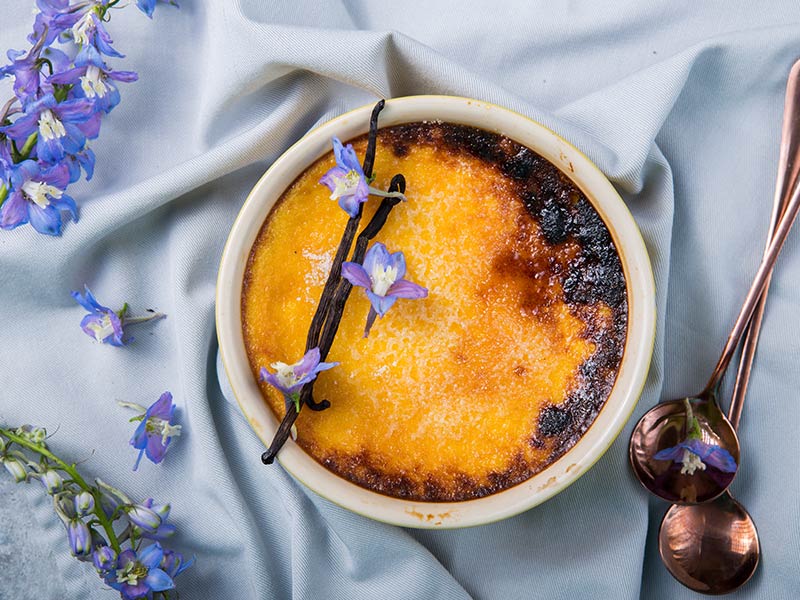
This dessert is a study in contrasts. The top is hot, brittle, caramelized sugar that tastes slightly bitter and smoky. Beneath it lies a cold, vanilla-rich custard that is impossibly smooth. Eating it is an active experience. You shatter the top, scoop up a bit of the shards with the cream, and let the textures mix in your mouth.
It is elegant and playful all at once. Sitting in a bistro, cracking into that sugar shell, you feel a sense of permanence. This dish has been enjoyed for generations, and now, it is yours to enjoy, too.
Macarons
If Paris were a cookie, it would be a macaron. Not to be confused with the coconut macaroon, the French macaron is a meringue-based sandwich cookie made with almond flour, egg whites, and sugar.
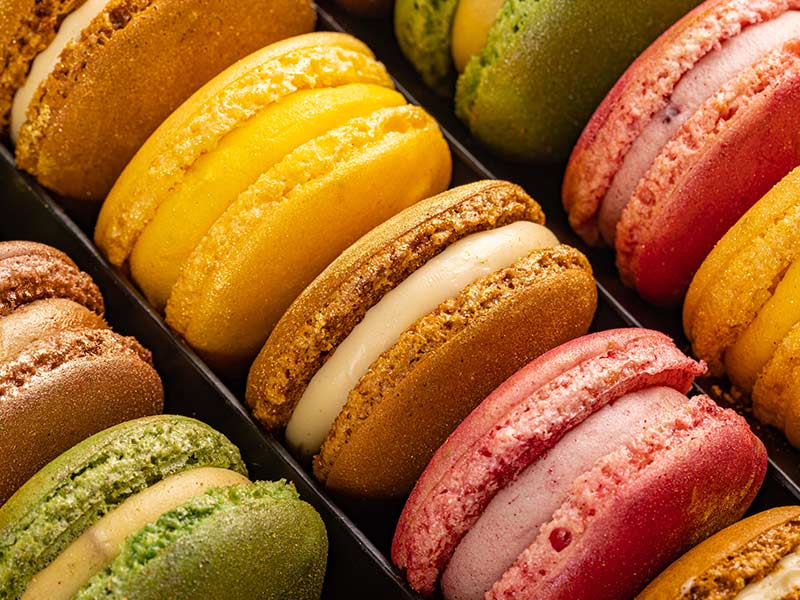
They are beautiful—rows of pastel colors in bakery windows, ranging from pistachio green to raspberry pink. The shell should be smooth and crisp, shattering slightly when you bite it, leading to a chewy interior and a flavorful filling of ganache, buttercream, or jam.
They are delicate and finite. They crumble. They are a reminder to savor the moment because it won’t last. Buying a box of assorted flavors—salted caramel, rose, chocolate, lemon—and sharing them with friends on a park bench is a quintessential teen memory in France.
Local and Regional Specialties
France is not a monolith. The food changes as you move from the rainy north to the sunny south. To eat these dishes is to understand the geography of the land.
Boeuf Bourguignon
This is the dish that Julia Child brought to American kitchens, but tasting it in its home region of Burgundy is a revelation. It is a stew of beef slowly braised in red wine (Burgundy, of course), beef broth, garlic, pearl onions, fresh herbs, and mushrooms.
It is deep, dark, and intensely savory. The meat should fall apart with a fork. It is the taste of patience. It takes hours to make properly. When you eat it, you are tasting the history of the region—the cattle grazing in the fields, the vineyards stretching across the hills. It is hearty fuel for a growing teen and feels like a warm hug on a cold day.
Join Us in France!
Ratatouille
Travel south to Provence, where the sun shines bright and the cicadas sing, and you will find Ratatouille. It is a vegetable stew made of eggplant, zucchini, peppers, and tomatoes, cooked down with olive oil, garlic, and herbs like thyme and basil.
It can be served hot, cold, or at room temperature. It tastes like summer. It is vibrant and healthy, a celebration of the garden. For a teen who might be feeling weighed down by all the bread and cheese, Ratatouille is a refreshing, palate-cleansing reminder of the agricultural richness of the Mediterranean coast.
A Journey of Flavors
We often return from trips with souvenirs—keychains, t-shirts, ticket stubs. But the most enduring souvenirs are the sensory ones. Years from now, you might forget the specific date you visited the Eiffel Tower, but you will remember the crunch of that first baguette. You will remember the nervous laughter before trying the snail. You will remember the way the Crème Brûlée snapped under your spoon.
These foods are more than just sustenance; they are an education. They teach you about history, geography, and agriculture. They teach you about patience and artistry. But most importantly, they teach you about yourself. They show you that you are capable of navigating a new world, one bite at a time.
So be sure to add “Eat french food in Paris” to your teenage bucket list!
And when you are on your Teen Trek, I urge you: be brave. Walk into the bakery. Sit at the bistro table. Order the thing you can’t quite pronounce. Your palate is a passport, and it is time to get it stamped.